

pebw.over-blog.com/
14 Février 2021

Most Xcode project types support build rules, which allow developers to modifyhow existing file types are built, and to define how new file types are built.The J2ObjC scripts are intentionally designed to plug into build systems like Xcode.
The j2objc-sample-reversi project isan example of how to add Java sources to a simple iOS game.
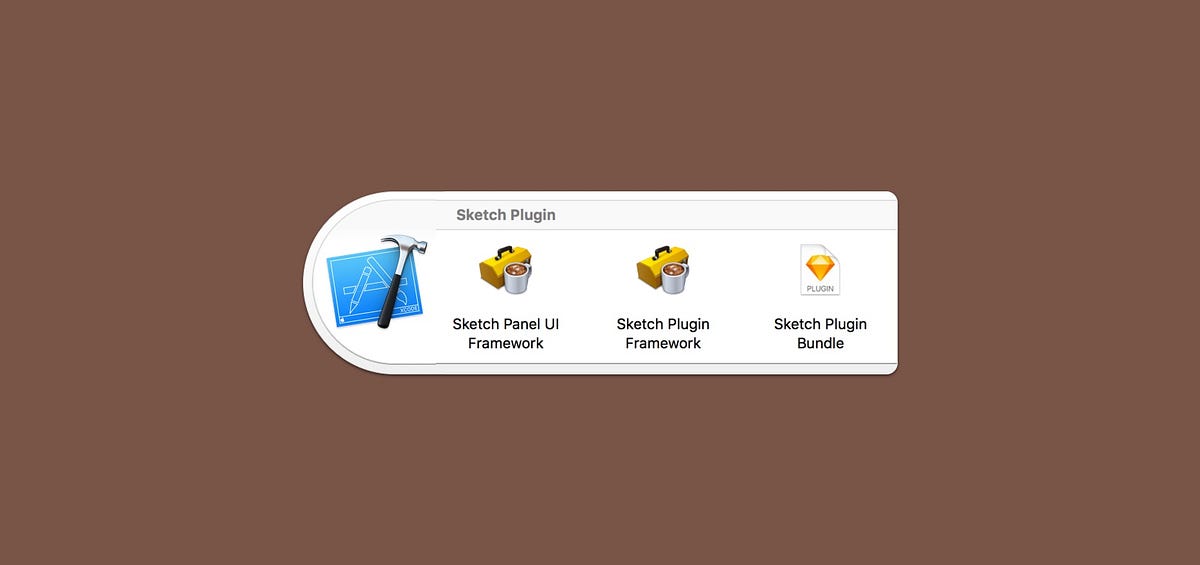
Link XCode project to GitLab project; Init Git Flow; Each step will be showed in more details next. Create the project in XCode This is the most easy part. Just create a new project in XCode.

The Xcode Plugin adds a number of tasks to your project. The main tasks that you will use are the xcode, cleanXcode and openXcode tasks. The following diagram shows the relationships between tasks added by this plugin. Good notes 5 price. Xcode Plugin AutoCompatible. GitHub Gist: instantly share code, notes, and snippets.
A minimal build requires updating build settings and then adding an J2ObjC build rule.
jre_emul) by adding -ljre_emul to Other Linker Flags.It should look like this:J2OBJC_HOME and set its value to the location of J2ObjC. This shouldeither be the folder resulting from unzipping the release zipor the j2objc/dist folder if you compiled from source and your root is j2objc.${J2OBJC_HOME}/frameworks${J2OBJC_HOME}/lib (for each build configuration).${J2OBJC_HOME}/include.J2OBJC_HOME. You should see something similar to this:Super mega slot wins. Determine the root directory of your Java source files, which we'll call$source-root. The root directory is the directory that contains the toppackage of your source files.
If you using git and would like to pull in your Java files from another git project, you canadd a submodule tracking the project with your Javasources. How to set two sided printing for mac os. For example, suppose your Xcode project (xcodeproj) is in ~/dev/MyProject then youlikely have another MyProject directory with your Objective-C source. In the~/dev/MyProject/MyProject directory run git submodule add git@github.com:user/javaproject tocreate a ~/dev/MyProject/MyProject/javaproject directory with source for your Java projectright along side your Objective-C sources. You can then drag that folder into your Xcode projectunder the MyProject group, which has Xcode mirroring your filesystem.${PROJECT_DIR}/MyProject/javaproject/src is the $source-root.
If your Java sources are in a group or directory in your Xcode project, the $source-rootis ${PROJECT_DIR}/__group_or_directory_name__.
If in doubt, right click on that group or directory and select Show in Finder to see thedirectory and use the absolute path.
For example, if you have a Java package foo.bar in a directory called ~/myproject/src,that package's Java files should be in ~/myproject/src/foo/bar/**.java -- that means~/myproject/src is the root directory for your project.
If the Java source files are external to the Xcode project, enter the full path used whenlisting them in a Terminal window.
Click the project in the Project Navigator to open the Project Editor and ensure theapplication target is selected.
Click the Build Rules tab. Best trap plugins for logic pro x.
Click the + to add a build rule.
For the new rule's Process option, select 'Java source files'. The Using option should be 'Custom script:'.
In the custom script text box, add the following (remember to substitute $source-root):
In the Output Files panel, click the + button and add: ${DERIVED_FILE_DIR}/${INPUT_FILE_BASE}.h.
Click the + button again, and add ${DERIVED_FILE_DIR}/${INPUT_FILE_BASE}.m.
When you are finished, the settings panel should look something like this (note: as of 10.2, Xcode still defines theDERIVED_FILES_DIR variable the same as DERIVED_FILE_DIR for backwards compatibility):
https://wuhyu.over-blog.com/2021/01/decompress-zip-file.html. The link build step (Xcode's 'Link Binary With Libraries' build phase) needsJ2ObjC-specific flags, which vary depending on how your application uses translated Java classes.For a complete list see Required Link Settings. Here are a coupleexamples what additional libraries you may need to link:
java.util.zip package you must link the libz.dylib library by adding-ljre_zip to your Other Linker Flags.If Xcode reports a build failure with these steps, open the Issue Navigator andclick on an error to inspect the details. This will show the details of what command-linestatement was executed. Here are a few common errors:
Class cannot be resolved - Most likely, the $source-path you used was incorrect.Look for the -sourcepath option in the executed command and ensure it points to theroot directory of your Java source files.
'JreEmulation.h' file not found - Most likely, the problem is a bad User Header SearchPaths value. Search the build command for the -I option with the path; if it looks okay,copy the path (not the -I) and in a terminal window run ls with that path to verify thereisn't a typo.
'_IOSClass_FromClass', referenced from: or '_OBJCCLASS$_Java' - Either the LibrarySearch Paths is incorrect or you forgot to link the JRE emulation library by setting OtherLinker Flags to -ljre_emul. You may also need to link additional libraries.
Undefined symbols: _iconv* - Link in the required iconv library.
If you still have problems, ask thej2objc-discuss group.


/image%2F6315703%2F20210327%2Fob_187a22_samsung-usb-options.jpeg)
/image%2F6315703%2F20210327%2Fob_bfb6bb_goodnotes-5-upgrade-bundle.jpeg)
/image%2F6315703%2F20210327%2Fob_1db0bb_powerpoint-set-password.jpeg)
/image%2F6315703%2F20210327%2Fob_11972d_feeding-frenzy-deluxe-order-number.jpeg)